I once worked with a scientist who was preparing to present an idea to other scientists in his organization.
He had an hour, and everyone expected him to use slides.
I asked him why.
He laughed and said, essentially, “Because if you don’t have slides, people think you didn’t prepare.”
Normally, a presentation like his might have involved 50 slides. Instead, he decided to see how few he could get away with while still demonstrating that he had done his homework.
He got it down to five.
What happened next was interesting.
He still covered everything important. But without 50 slides dictating where the conversation had to go, something else became possible.
People asked questions.
They challenged ideas.
They built on what he was saying.
He could notice someone raising a hand and ask what they were thinking.
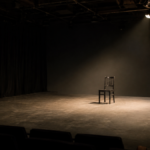
There was space for people to enter the conversation.
And at the end of the hour — around 5:00 in the afternoon, when you might expect everyone to be heading for the door — people stayed engaged.
They told him, “You’re onto something. Keep me in the loop.”
All he had really done differently was leave some space.
What happens when we don’t close the door?
I saw something similar in a very different situation.
The head of a company with roughly 100 employees had to deliver some terrible news. The industry was in a downturn. He had tried to reduce expenses and increase revenue, but nothing seemed to be enough.
He believed the company would have to downsize.
At the end of his presentation, though, he left the door open just a crack.
He told the employees that if anyone had another idea, he would look at everything they sent him.
Those 90-some employees gave him 111 ideas.
Maybe that invitation was planned. Maybe it was an afterthought.
Either way, it created space where there hadn’t been any.
Instead of saying, “The decision has been made,” he essentially said, “Is there something else we haven’t considered?”
Watch what happens in the room
This is something I’ve been paying more attention to: the relationship between space and the human side of how we work together.
One way to explore it is simply to watch.
The next time you’re in a meeting you’re not leading, notice how space is being used.
Is every minute filled?
Is the person presenting so focused on getting through the material that there’s no opportunity for anyone else to enter the conversation?
Or are there moments when people start leaning forward, raising their hands, asking questions, challenging something or adding an idea?
Can you see the energy change?
I’ve been in meetings where everyone has that polite look on their face, but they might as well be statues.
And I’ve been in others where you can almost see the energy moving around the room.
Sometimes the difference is remarkably simple.
Someone left a little space.
The next time you’re in a meeting, try watching for it.
What happens when there is space?
And what happens when there isn’t?
Come over to LinkedIn and tell me what you noticed. I’d like to hear what you’re seeing — and learn from it together.
 About the Author, Rick Maurer