I love coffee.
And when I’m standing in line at my local coffee shop, invariably someone ahead of me orders a latte.
But I’ve never heard anyone say, “Give me a latte, but hold the milk.”
You can’t.
A latte is a seamless blend of espresso and steamed milk. Take away either one and you don’t have a latte.
And if you make the espresso first and pour in some milk as an afterthought, that’s something else entirely.
I think about that when I work with organizations going through change.
Are You Really Blending?
Every change has a technical side.
At least I hope it does.
There’s a plan. There are steps, timelines, budgets, responsibilities and all the other things necessary to get from here to there.
Then there’s the people side of change management.
Too often, we treat that part like the milk we pour in at the end.
Think about a 45-minute meeting where the person in charge spends 40 minutes talking. There are slides. Maybe they’re even very good slides.
Then, with five minutes left, someone says, “So, what are your reactions?”
We may walk away thinking we involved people.
But did we?
Here’s a simple test I’ve found useful:
If you removed the part where people were invited to participate, would the meeting still feel complete?
If the answer is yes, you probably didn’t blend them into the process.
You added them at the end.
When People Become Part of the Work
When the technical and human sides of change are truly blended, people don’t feel like an audience.
They’re part of the conversation.
They can get excited about an idea. They can question it. They can disagree. They can spot a problem before it becomes a bigger problem. They can see an opportunity to make something work better.
Most importantly, they can influence what happens.
I recently told the story of a scientist who was accustomed to giving presentations with about 50 slides. One day, he cut the presentation down to five.
He still covered what he needed to cover.
But something else happened.
People had time to digest what they were hearing. They asked questions. They made additional points. They agreed and disagreed.
It became a conversation.
The important difference wasn’t really the number of slides.
He was open to being influenced.
By creating space in the meeting, he gave himself the latitude to listen. He could ask, “What do you think?” and actually have time to hear the answer.
That’s the blend.
It’s not the plan over here and the people over there.
It’s difficult to tell where one ends and the other begins.
And when that happens, people can leave a meeting thinking, “I was part of that. I helped make that happen.”
That’s very different from simply doing what someone told you to do.
So here’s the question I’d like you to consider:
Where have you seen this done well?
Maybe you led the meeting. Maybe you were sitting in the room. It doesn’t have to be a dramatic example.
I’d love to hear about a time when the technical work and the human side came together so naturally that people genuinely felt part of what was happening.
Come over to LinkedIn and tell me about it. I suspect we could all learn something from those stories.
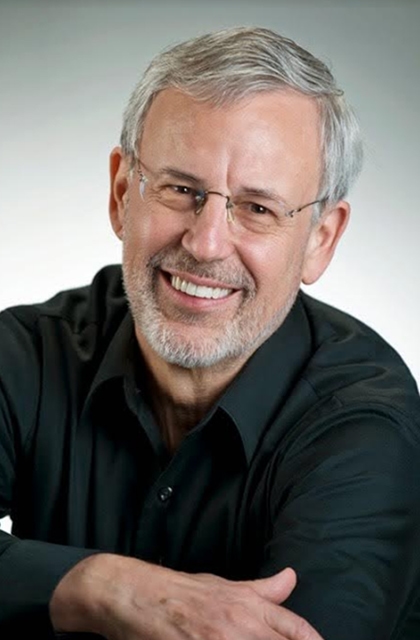 About the Author, Rick Maurer